
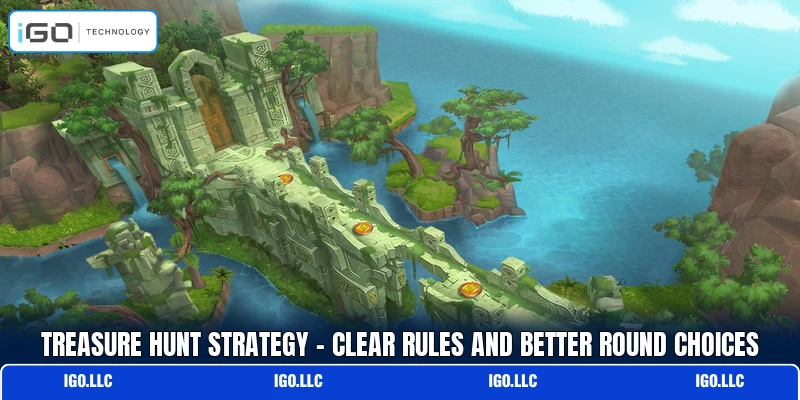
Treasure Hunt strategy starts with understanding how hidden positions, increasing returns, and failed picks interact during one complete round. At IGO, members can follow the displayed map, choose stakes in PHP or USD, and review every available action before confirming a selection. This article is written for players who need clear rules, focused decision methods, and a simple purpose for approaching each treasure round carefully.
Treasure Hunt strategy guides each round decision clearly
IGO presents a map-based betting game where covered positions may hold rewards, multipliers, or an ending symbol that closes the current attempt. Each choice changes the remaining possibilities, so players should read the screen carefully instead of tapping several positions without reviewing updated information. A sound Treasure Hunt strategy treats every reveal as a new decision rather than a repeated action from the previous turn.
Before a round begins, members select an accepted stake, which may appear as PHP 20, PHP 50, USD 1, or another listed amount. The interface then shows available positions, current return value, and any option to collect a result before opening another covered space. Clear round planning depends on these visible details because the map state can change after every confirmed pick.

Core rules that control each treasure round
The main rules connect stake selection, covered map positions, reward updates, and the condition that ends a round. Treasure Hunt strategy works best when players understand this sequence before making their first paid selection.
Starting the map and stake
A new round begins after the member chooses a stake within the minimum and maximum limits shown beside the game controls. The selected amount remains tied to that round, so changing it usually requires completing or leaving the current map first. Players should confirm whether the display uses PHP or USD before pressing the button that starts the selection stage.
After confirmation, the game generates covered positions and displays the opening return information for the active attempt. Some rooms may show a simple grid, while others use paths, chests, islands, or marked areas with the same hidden-choice idea. The map should be treated as a fresh arrangement because previous results do not identify the contents of a new round.
Choosing covered treasure positions
Players select one covered position at a time, and the game reveals the assigned symbol immediately after confirmation. A reward symbol may increase the displayed return, unlock another choice, or update the number of safe positions still available. A failed symbol may close the round, depending on the exact rule panel shown before play begins.
The key action is reviewing the updated map before selecting again, since the available information changes after each reveal. Members should check the current value, remaining covered spaces, and whether a collect button has become active. This Treasure Hunt strategy step prevents automatic tapping when the round already presents a different set of choices.
Resolving rewards and failed picks
A collected result is calculated from the active stake and the return value shown when the member confirms the collection. For example, a PHP 50 stake with a displayed 2.00 return would produce PHP 100 before any listed adjustment. USD play follows the same displayed calculation, although the available amounts may differ between rooms.
View more: Chicken Road Online – Complete Guide For Philippine Players
When a failed pick appears, the game settles the round according to the written condition attached to that symbol. Members should verify whether partial rewards remain, disappear, or convert under a special feature because not every map uses identical settlement terms. The final history entry should show the stake, revealed sequence, and settled result for later checking.
Decision methods for stronger treasure map selections
Good decisions come from reading the current map, comparing visible outcomes, and choosing whether another reveal still matches the round objective. The methods below keep Treasure Hunt strategy focused on game information instead of guesses based on earlier maps.
Reading Treasure Hunt strategy signals
The first useful signal is the current return compared with the number of covered positions still available on the screen. A larger displayed value may look attractive, but another reveal can still replace that result with a failed settlement. Players should compare the next possible action with the amount already available for collection.
The second signal is any rule indicator showing remaining rewards, hazards, bonus spaces, or locked positions. These counters can narrow the visible situation, although they do not guarantee what the next covered area contains. Strong Treasure Hunt strategy reading uses confirmed screen data and avoids treating decorative map patterns as hidden predictions.
Comparing risk across visible choices
Covered spaces often look different because of their location, artwork, or animation, but appearance alone may not change the assigned outcome. Players should rely on the rule panel and available counters rather than assuming corner, center, or highlighted positions are automatically safer. When no probability information appears, each selection should be treated according to the same published conditions.
Stake size also changes the cash value of every displayed return, even when the multiplier remains unchanged. A move from PHP 20 to PHP 100 increases both the possible collected amount and the amount committed to the round. A disciplined Treasure Hunt strategy compares those figures before the map begins, not after several reveals have already occurred.
Collecting returns at the right time
The collect decision matters because it closes the round and records the current displayed return without opening another position. Players can compare the secured amount with the next reveal requirement, the remaining map state, and any feature still available. This decision should follow the current screen rather than a fixed number of clicks used in every session.
Members may set a round target, such as collecting after a listed multiplier appears or after a specific number of successful reveals. That target should remain flexible when the interface shows different hazards, bonuses, or settlement conditions than expected. Final Treasure Hunt strategy choices are stronger when players use the target as a guide while respecting the live map information.
View more Category: Arcade
Conclusion
Treasure Hunt strategy combines rule knowledge, careful map reading, and timely collection decisions within each active round. Members can use IGO to review PHP or USD stakes, follow visible settlement terms, and check completed results without relying on unsupported patterns. Register, download the app, open the game, and may every well-read treasure map bring a favorable result.